
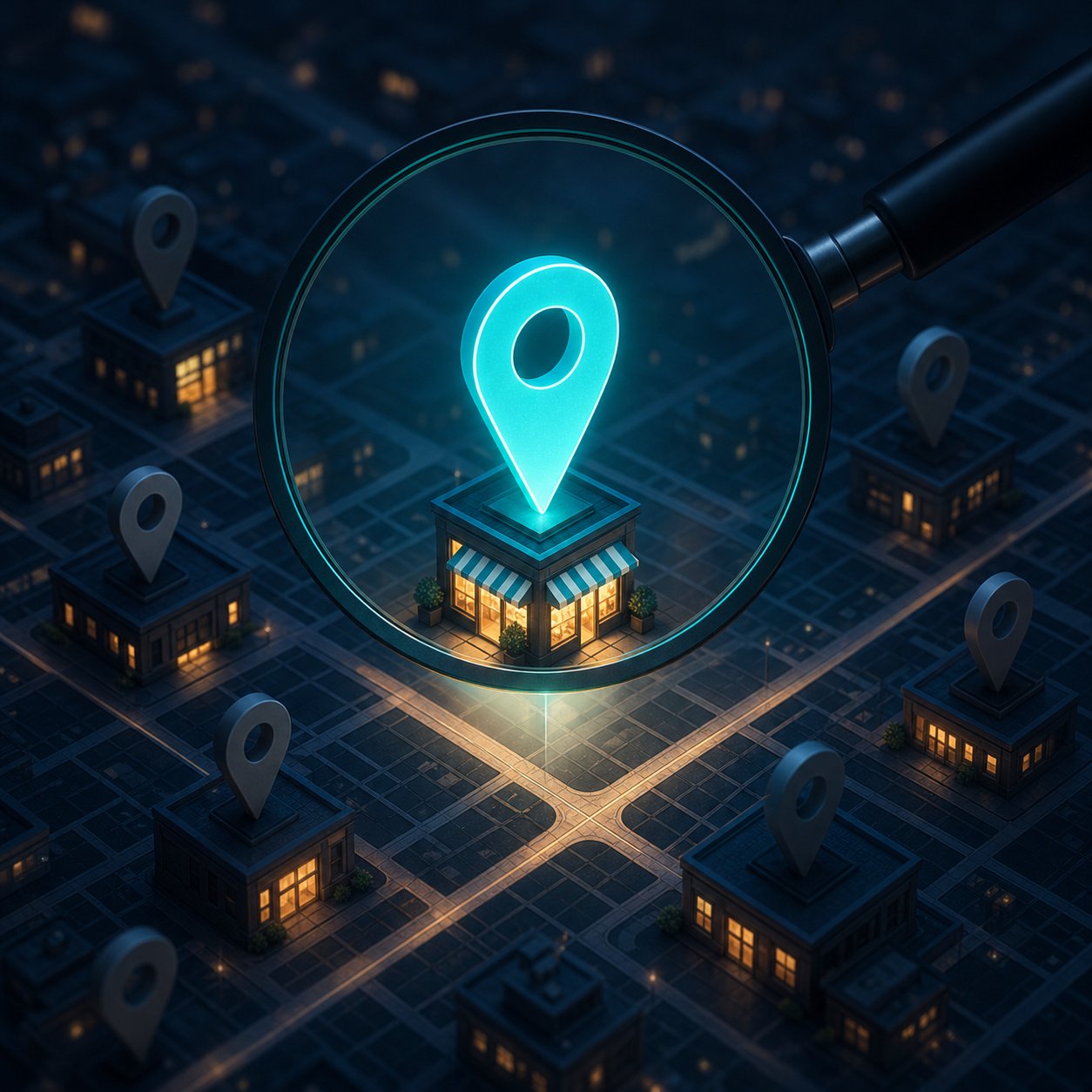

When someone in your area searches for what you sell, three businesses appear at the top of Google — and everyone else is invisible. Local SEO is how you become one of those three. The stakes are concrete: 46% of Google searches have local intent, 76% of “near me” searches convert within 24 hours (calls, visits, or purchases), and complete Google Business Profiles earn roughly 7x more clicks than incomplete ones. This step-by-step local SEO checklist shows exactly how to get your small business found on Google — no ads required.
How Local Search Actually Works
Local results come from three signals Google weighs for every query with location intent (“plumber near me,” “best accountant in [city],” “open now”):”
- Relevance — does your profile and content match the search?
- Distance — how close is your business to the searcher (or their stated area)?
- Prominence — does Google have proof you’re a real, trusted, active business (reviews, citations, links, engagement)?
You can’t move your storefront closer — but you can maximize relevance and prominence starting this week. That’s this checklist.
Phase 1 — Google Business Profile: Own the Foundation
1. Claim and verify the profile. Every location gets its own verified listing. If you serve customers at their location instead (no storefront), set the service-area business type correctly rather than faking a physical address — misrepresentation gets profiles suspended.
2. Complete every field like it’s a ranking factor — because it is. Primary category (choose the single most accurate one, then add secondary categories), services with descriptions, products, hours (including holidays), attributes, and a 750-character description written for humans with your key services and area named naturally.
3. Nail your NAP consistency. Name, Address, Phone must be identical everywhere — website footer, profiles, directories, social bios. “Suite” vs “Ste.,” a tracked number vs. a local number — pick one canonical version and enforce it. Inconsistent NAP is how Google loses confidence in your existence.
4. Add real photos — and keep them coming. Team, storefront, job sites, products, before/afters. Profiles with fresh, genuine imagery get more actions than text-only ghosts. Aim for a handful of new images monthly, not thirty on day one and never again.
Phase 2 — Reviews: The Prominence Engine
5. Build a steady review engine. Review volume and recency heavily influence the local 3-pack — benchmarks suggest 4.0 is the minimum to compete and 4.5+ is the 2026 threshold for serious visibility, with profiles over 100 reviews seeing notably more profile actions. Systematize the ask:
- Request after every successful delivery (automated text + email with a direct review link).
- Make it one tap — deep-link straight to the review box.
- Respond to every review: thank the praise, address the problem publicly and take it offline. Responses signal activity to both Google and prospects.
6. Never buy reviews or gate them. Filter “only happy customers” and you’re building on sand — policy violations tank profiles exactly when you can least afford it. A steady stream of honest asks beats a polished fraud.
Phase 3 — Your Website: Make It Locally Relevant
7. Build a location strategy into the site. One page per real service area you genuinely serve (city/neighborhood pages with unique, useful content — not cookie-cutter city swaps), your NAP in the footer sitewide, and embedded Google Maps on the contact page.
8. Publish local content that answers real searches. “How much does [service] cost in [city]?” “Best [service] for [common local problem]” — guides, project stories, and FAQs grounded in your actual market. This feeds both Google and the AI answers that increasingly summarize local options.
9. Add LocalBusiness structured data. Schema markup for your name, address, hours, services, and geo coordinates helps search engines parse your business facts precisely. Your SEO layer (e.g., Yoast + local schema) handles most of this — verify it in Google’s Rich Results Test.
Phase 4 — Citations, Links & Engagement
10. Lock the core citations. Google Business Profile, Apple Maps, Bing Places, Facebook, Yelp, and the major industry directories — consistent NAP, correct categories, linked back to your site. Then niche directories (chamber of commerce, trade associations, local business groups) for prominence signals money can’t fake.
11. Earn local links and mentions. Sponsor a youth team, contribute a genuine expert quote to local media, partner with complementary businesses, join your chamber. One real local link from a respected organization outperforms fifty generic directory links.
12. Post weekly and answer questions. GBP posts (offers, updates, events) show an active business — benchmarks link weekly posting to meaningfully more direction requests. Q&A: seed the common questions yourself with accurate answers so prospects (and AI summaries) get yours, not guesses.
The 30-Day Local SEO Sprint
| Week | Focus | Done looks like |
|---|---|---|
| 1 | Profile foundation | 100% complete, verified, NAP locked, photos live |
| 2 | Review engine | Request automation live; first new reviews landing |
| 3 | Website local pass | Location pages, contact schema, map, footer NAP |
| 4 | Citations + content | Core directories consistent; first local article published |
Worked Example: What “Good” Looks Like in Practice
Composite of a typical local service business after a sprint like this: a prospects searches “emergency [service] near me” at 7:40 PM. Your profile shows correct hours (open), 4.8 stars across 120+ reviews with responses, fresh photos of real jobs, and a one-tap call button. They tap, they call, they book — the76%-convert-in-24-hours behavior, in your favor. Meanwhile your competitor’s profile has: no photos since 2024, a wrong holiday schedule, three unanswered 2-star reviews, and a website that 404s on mobile. You didn’t outspend them. You out-operated them.
How to Measure Progress
- Google Business Profile Insights — searches (discovery vs. direct), calls, direction requests, website clicks, trend monthly.
- Local pack visibility — spot-check your top 5 money keywords from your area (and use rank tracking if available).
- Review velocity — new reviews per month and average rating.
- Attribution — ask every new lead “how did you find us?” and tag it in your CRM. Search → profile → call should grow visibly.
What NOT to Do
- Don’t keyword-stuff your business name (“Best Plumber Houston Cheap Emergency 24/7 Plumbing Co.”) — it violates guidelines and invites suspension.
- Don’t create fake addresses or multiple listings for one business.
- Don’t chase every directory — consistency in the big ones plus genuine industry citations beats mass submission spam.
- Don’t ignore AI search — assistants now summarize local recommendations; the same signals (complete profile, reviews, clear site content) feed those answers. Fundamentals compound everywhere.
Want the checklist executed for you? DS Did It’s Digital Marketing & Customer Acquisition service handles the full local presence build — Google Business Profile, reviews engine, citations, local content — with tracking that ties visibility to actual leads. Request your local marketing assessment or see all services.
Already getting traffic but few customers? Why owners hire DS Did It to fix the whole funnel.
Frequently Asked Questions
How long does local SEO take to work?
Profile fixes can move visibility within days to weeks; review momentum and citation consistency take one to three months; location content and links compound over three to six months. Most businesses see measurable movement in calls and direction requests inside 60 days of consistent execution.
Do I need a physical address to show up in local search?
No. Service-area businesses can rank well with a properly configured profile (hidden address, defined service areas) — what you can’t do is invent an address or violate guidelines. Consistency and prominence do the rest.
Are Google Ads required to get leads locally?
Ads can accelerate early results, but this checklist targets the organic local pack and Maps — the placements buyers trust most and that keep producing without per-click fees. Many businesses run both: ads for immediate demand while organic compounds underneath.
How many reviews do I actually need?
More relevant than a magic number: steady recent velocity and a 4.5+ average. Early on, 25–50 quality reviews with responses already differentiates you from profiles with five dusty ratings — then keep the engine running monthly rather than sprinting once.